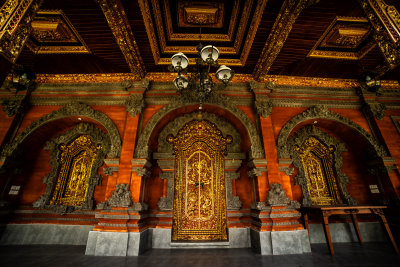
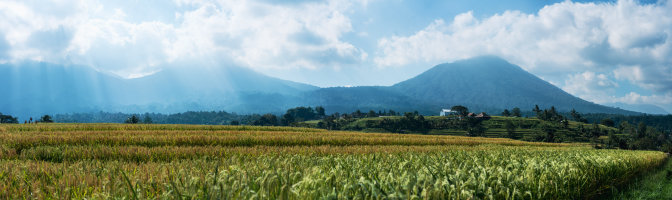
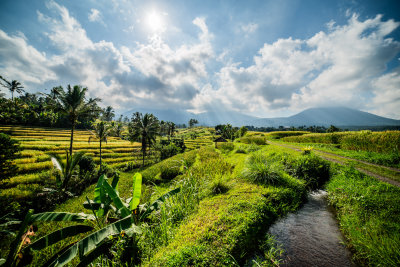
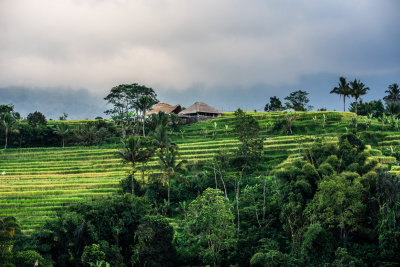
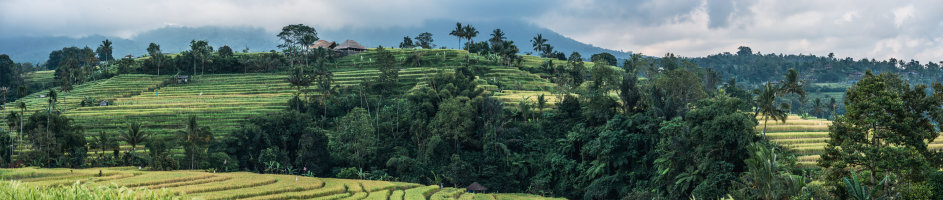
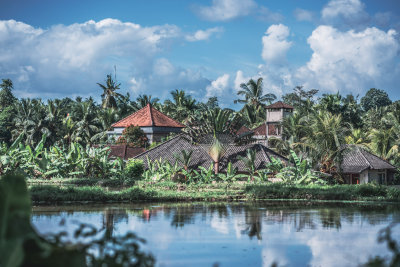
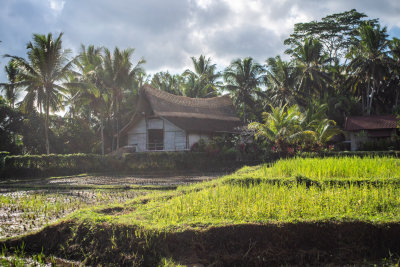
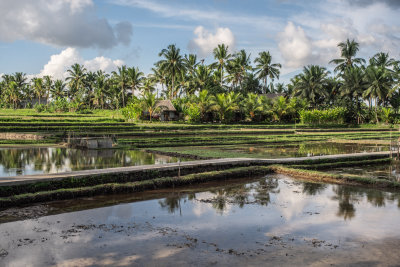
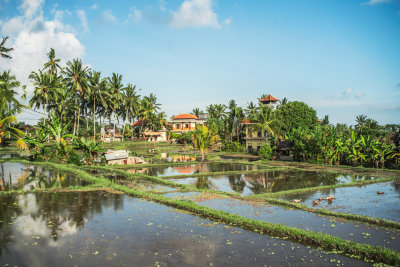
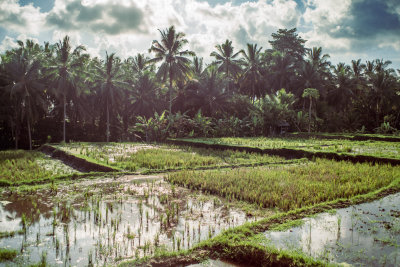
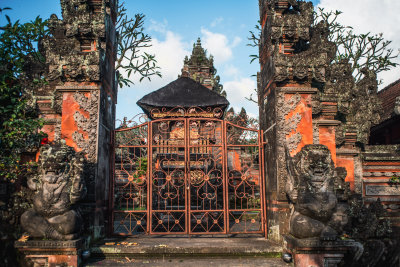
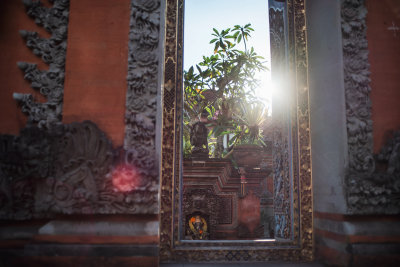
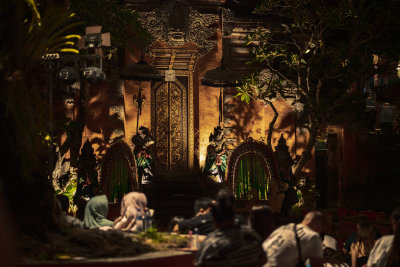
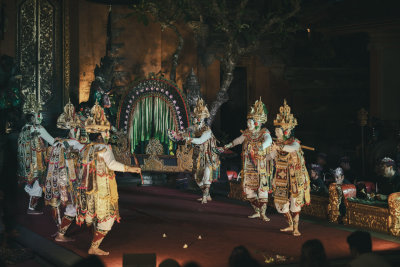
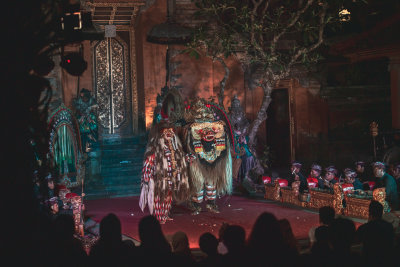
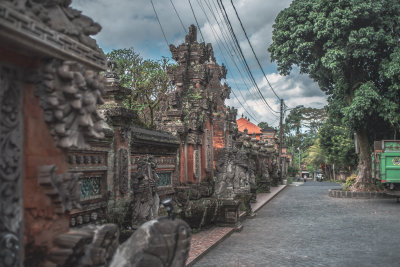
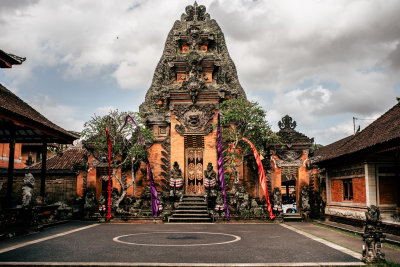
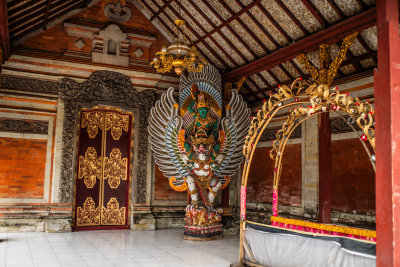
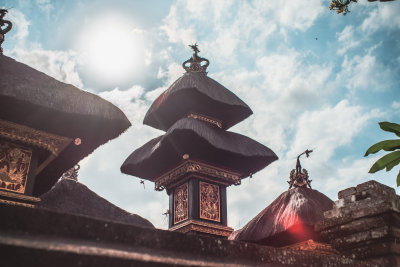
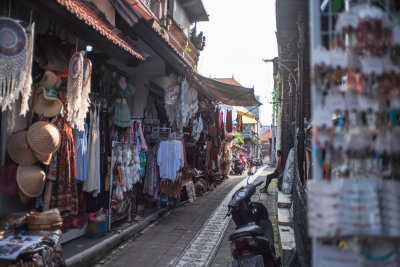
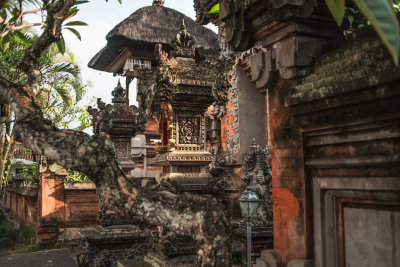
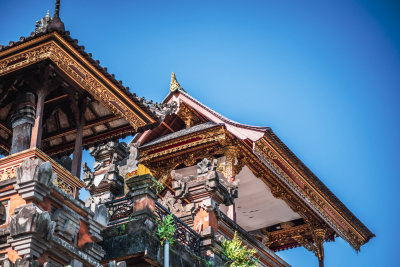
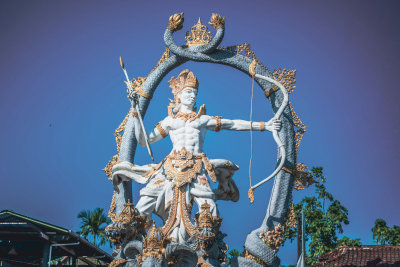
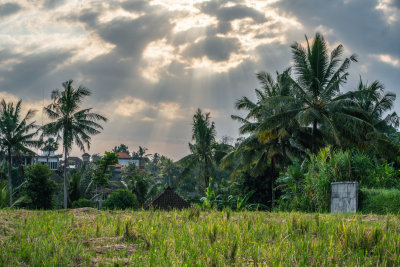
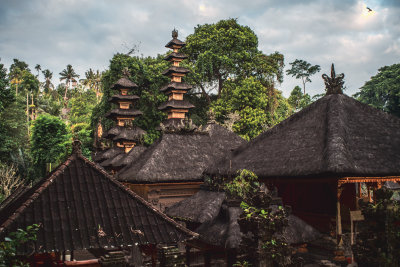
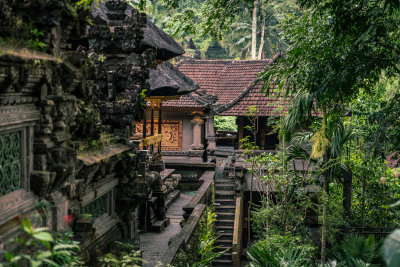
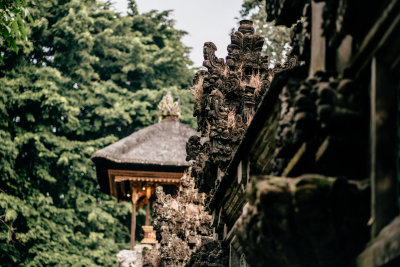
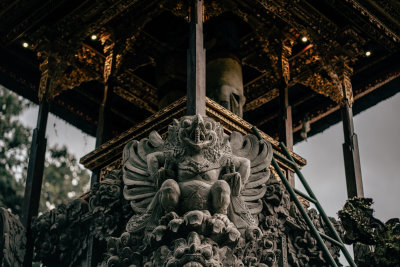
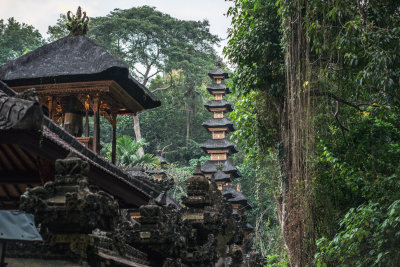
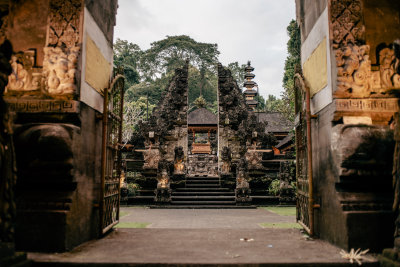
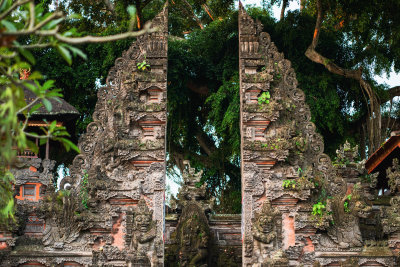
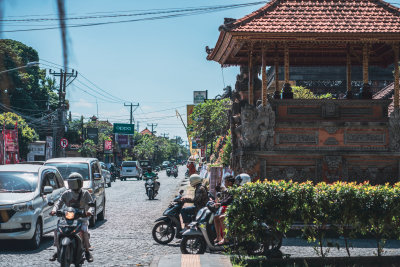
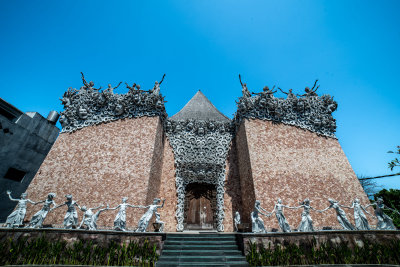
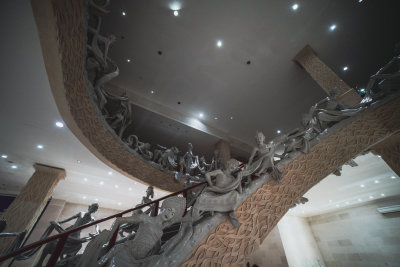
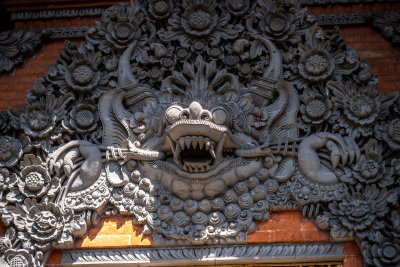
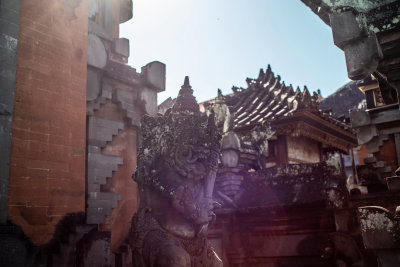
Bali's cultural heart, where a working royal palace, temple ceremonies, and terraced rice paddies share the same town center rather than being spread across an island tour.
April to October (dry season) for the most reliable weather and easiest walking on the ridge and rice-terrace paths; the wet season (November to March) brings the terraces to their greenest but adds afternoon downpours most days. Early morning, regardless of season, is the only reliable way to see Tegallalang or the palace courtyard without a crowd.
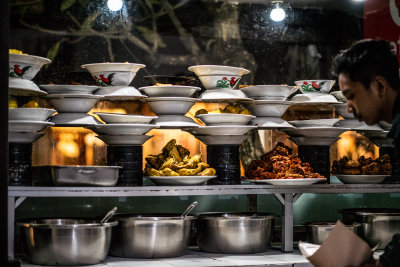
Babi guling (spit-roasted suckling pig, seasoned with a dense paste of Balinese spices) is the dish Ubud is known for island-wide, sold at warungs that often close as soon as that day's pig runs out. Nasi campur — a plate of rice with a little of everything available that day — is the everyday equivalent, served differently at nearly every warung in town.
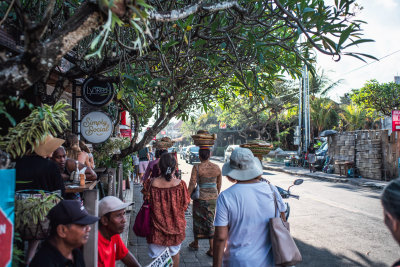
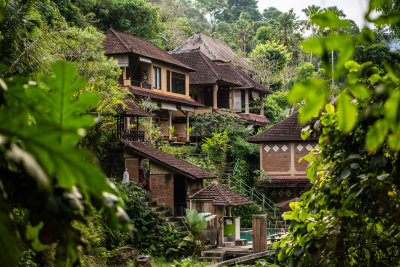
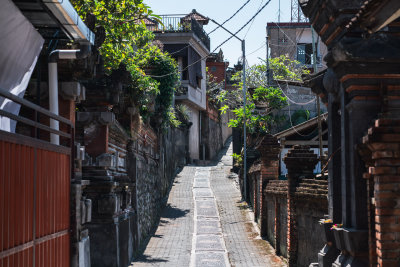
The town center, within walking distance of the palace and the main market, keeps the Campuhan Ridge Walk and most temples reachable on foot or by a short scooter ride; staying further out toward the rice terraces trades that walkability for a quieter, greener setting.
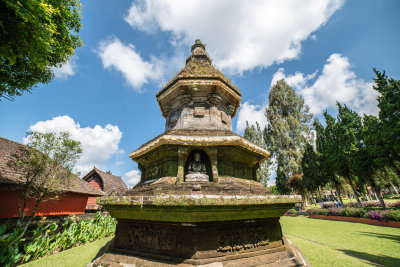
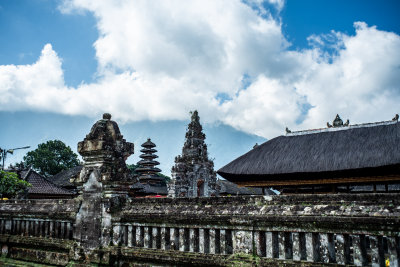
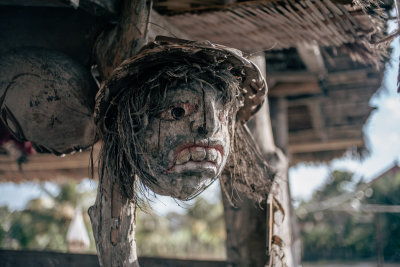
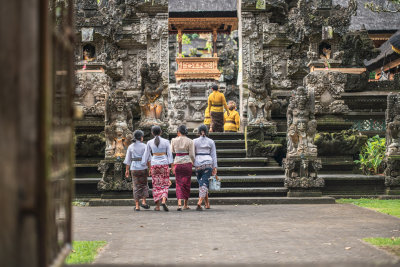
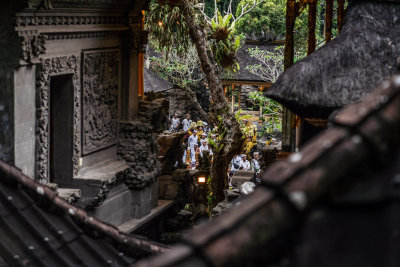
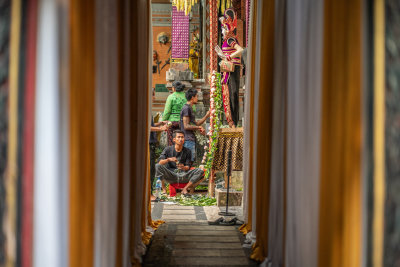
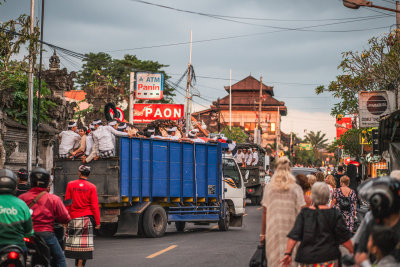
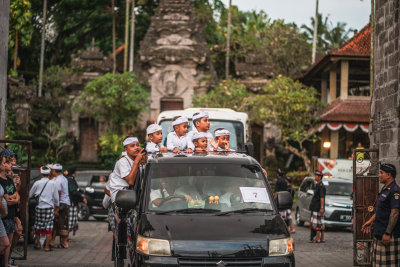
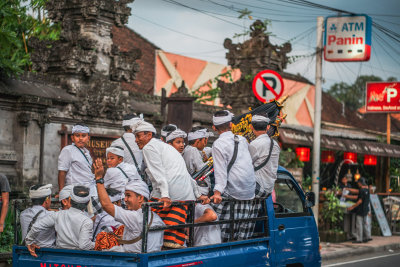
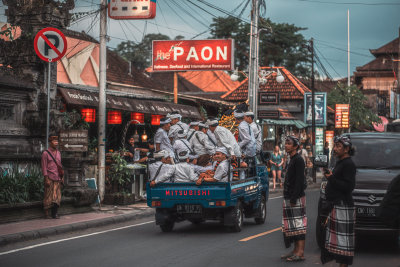
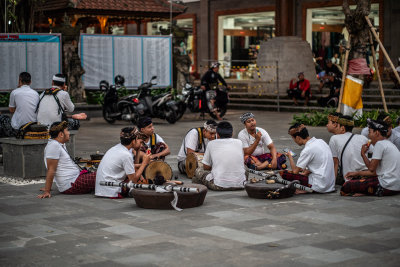
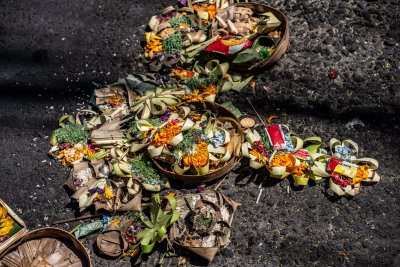
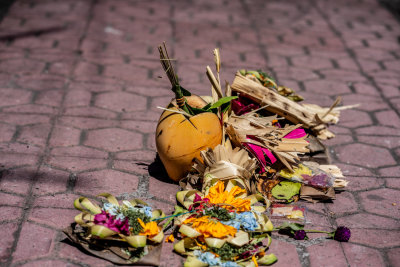
Check for a temple ceremony before you arrive rather than after — local calendars run on a 210-day Balinese cycle rather than the Western one, so a village odalan (temple anniversary) or procession can land on any date, and stumbling onto one, respectfully and from a distance, tends to be the most memorable thing about a visit.
Read more in Ubud Travel Guide: Bali's Rice Terraces, Temples & Royal Palace, Indonesia: The Landscapes of Bali and 10-Day Bali Itinerary: Ubud, Munduk, Sidemen & Seminyak.