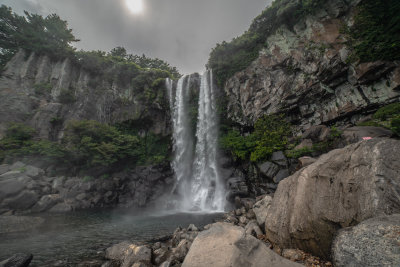
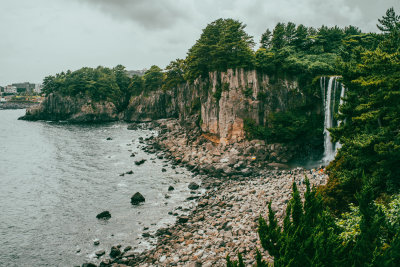
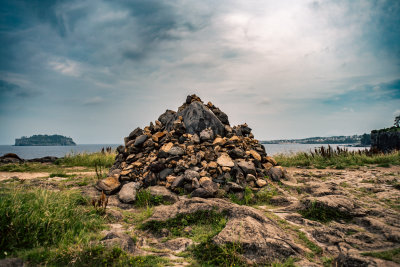
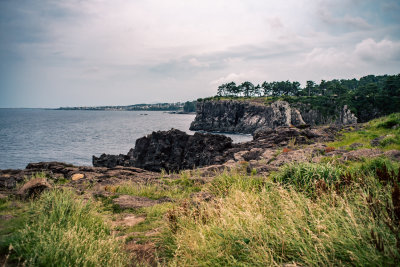
The south coast of Jeju Island, where a waterfall drops straight into the sea and the warmest slopes in Korea grow the country's citrus.
Spring (March to April) for mild weather and citrus blossom, or fall (September to November) for the clearest coastal visibility. Summer is Jeju's monsoon season — the falls run heaviest but the sky is often grey and misty, which has its own moody appeal but comes with real rain.
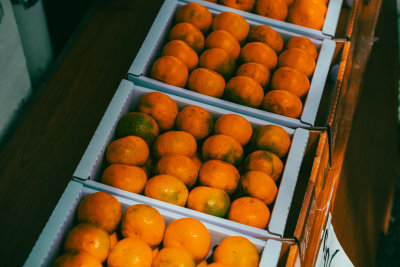
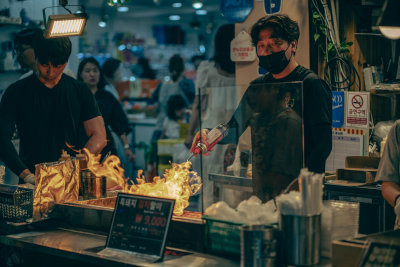
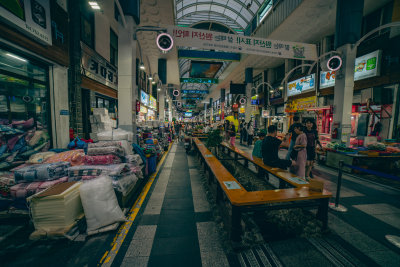
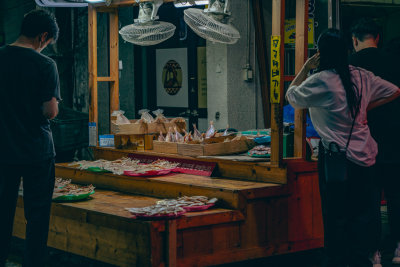
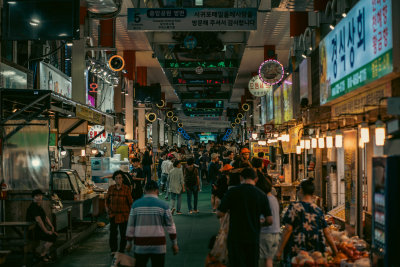
Hallabong, a Jeju citrus hybrid bred for a sweeter, easier-to-peel fruit than a standard tangerine, is grown on the slopes right around Seogwipo — buy it by the net bag at the Maeil Olle Market rather than at a tourist stand elsewhere on the island.
Base yourself in Seogwipo's town center near the harbor and market for walking access to both the falls and the coastal trail; stay in Jeju City instead only if nightlife and the airport matter more than the coast.
Walk down to the base of Jeongbang Falls rather than just viewing it from the clifftop road — the rocky shoreline at sea level is where the waterfall actually meeting the ocean becomes obvious, and it's a short, easy scramble down from the parking area.
Read more in Seogwipo Travel Guide: Jeju Island's Waterfall Coast, South Korea.