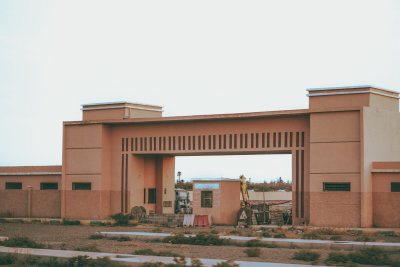
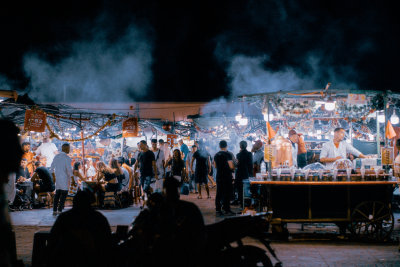
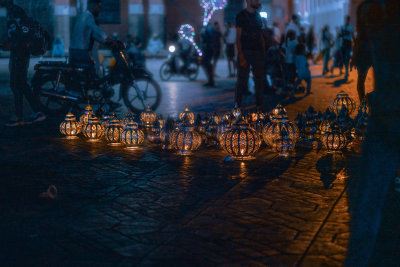
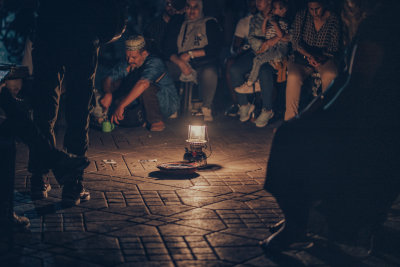
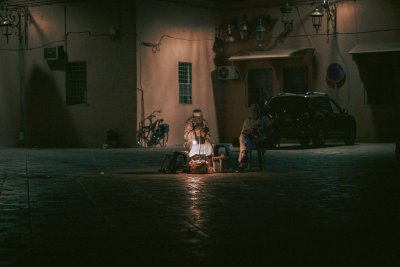
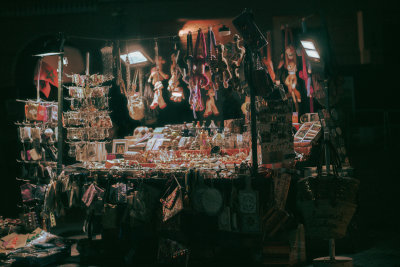
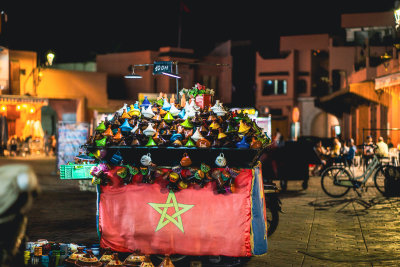
Marrakech, the largest of Morocco's imperial cities, spreads beneath the snow-capped High Atlas at the edge of the plains. Its red-earth ramparts enclose a dense medina of souks, palaces and riads, while the open square of Jemaa el-Fnaa has been a center of trade and performance for nearly a thousand years.
Spring (March–May) and autumn (September–November) offer warm, comfortable weather; summer is scorching, while winter days are pleasant but nights cold.
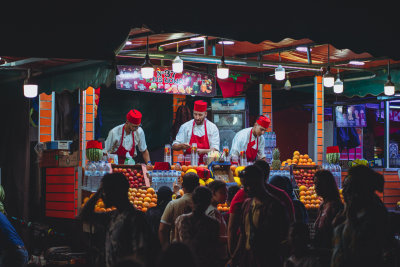
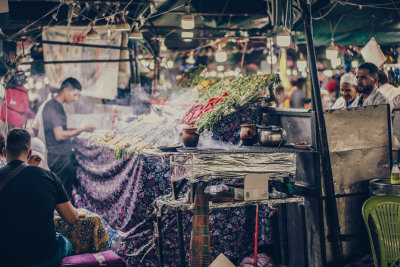
Tagine slow-cooked in conical clay pots, harira soup, couscous traditionally served on Fridays, grilled brochettes from the night-market stalls, and sweet mint tea.
A riad in the old medina puts visitors a short walk from the souks and Jemaa el-Fnaa, though the modern Gueliz district offers quieter, more spacious lodging.
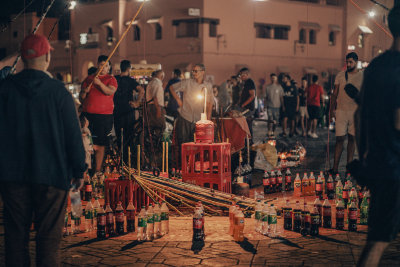
Performers in Jemaa el-Fnaa generally expect a tip for their photographs, so carry small coins and ask before taking pictures of people in the square.
Read more in Morocco: Marrakech, Fes, Chefchaouen & the Coast and Marrakech & the Sahara: red walls, kasbahs & the deep desert.